
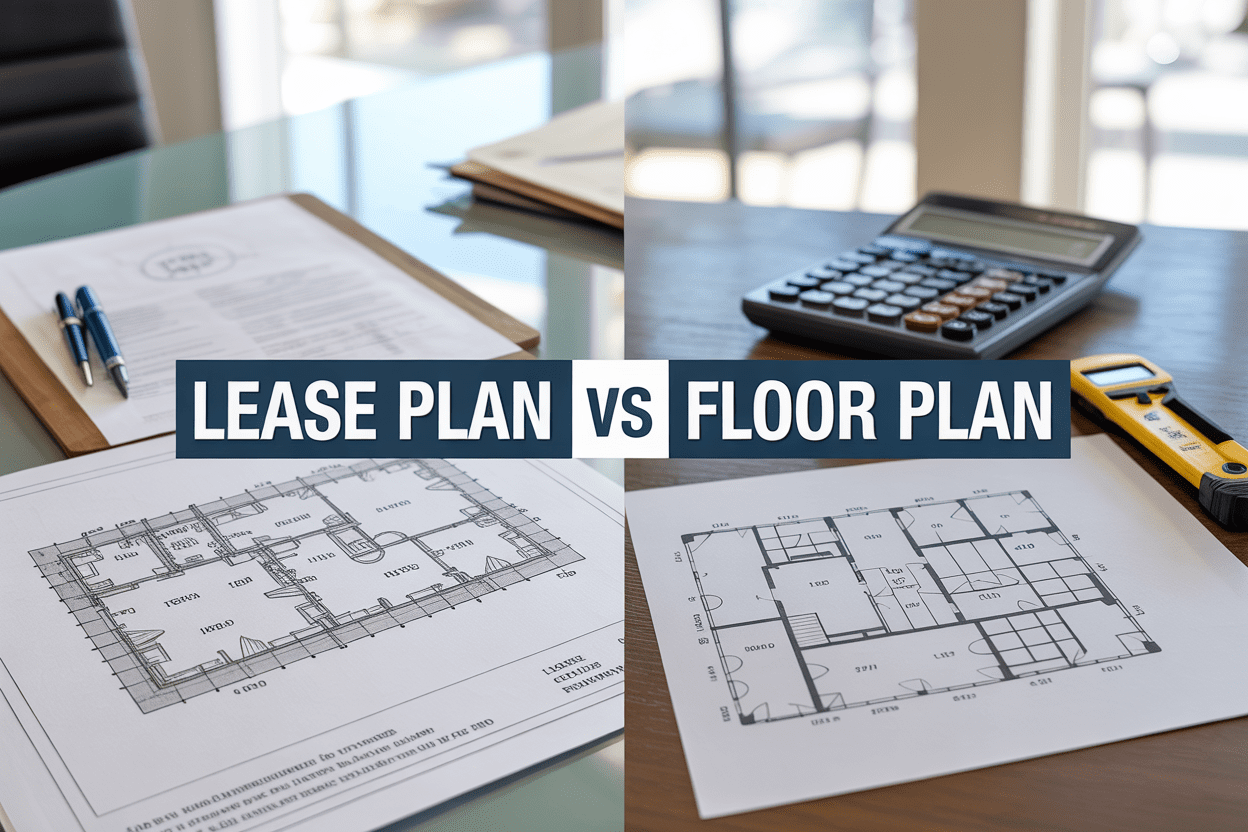
When you’re dealing with property transactions in the UK, understanding the lease plan vs floor plan distinction can save you time, money, and major headaches. We’re here to help property buyers, sellers, solicitors, and developers navigate these crucial documents that often get confused but serve very different purposes.
We’ll walk you through what makes lease plans and floor plans different, focusing on the specific requirements for Land Registry compliant lease plans that you’ll need for leasehold property transactions. You’ll discover when each type of plan is required and why using the wrong one can derail your property deal.
Our guide covers the essential elements every compliant lease plan must include and how to get the demise boundaries right – one of the most common areas where costly mistakes happen. We’ll also explain how to handle special areas like parking spaces, storage units, and communal areas that can complicate your lease plan requirements.
 Understanding the differences between lease plans and floor plans is crucial for anyone involved in UK property transactions. We’ve explored how lease plans serve as legally compliant documents required for leasehold property registrations, while floor plans are more general-purpose drawings used for various applications. The key distinctions lie in their legal requirements, scale precision, and specific elements like north points, red edging for demise boundaries, and Ordnance Survey location plans.
Getting your lease plan right from the start can save you significant time and money in property transactions. Whether you’re dealing with IRI or FRI lease types, multi-floor properties, or special areas like parking and storage, ensuring compliance with Land Registry requirements is essential. We recommend working with experienced professionals who understand Practice Guide 40 requirements and can help you avoid the common costly mistakes that lead to requisitions and delays in your property registration.
Understanding the differences between lease plans and floor plans is crucial for anyone involved in UK property transactions. We’ve explored how lease plans serve as legally compliant documents required for leasehold property registrations, while floor plans are more general-purpose drawings used for various applications. The key distinctions lie in their legal requirements, scale precision, and specific elements like north points, red edging for demise boundaries, and Ordnance Survey location plans.
Getting your lease plan right from the start can save you significant time and money in property transactions. Whether you’re dealing with IRI or FRI lease types, multi-floor properties, or special areas like parking and storage, ensuring compliance with Land Registry requirements is essential. We recommend working with experienced professionals who understand Practice Guide 40 requirements and can help you avoid the common costly mistakes that lead to requisitions and delays in your property registration.
What Makes Lease Plans and Floor Plans Different
Core definitions and visual similarities
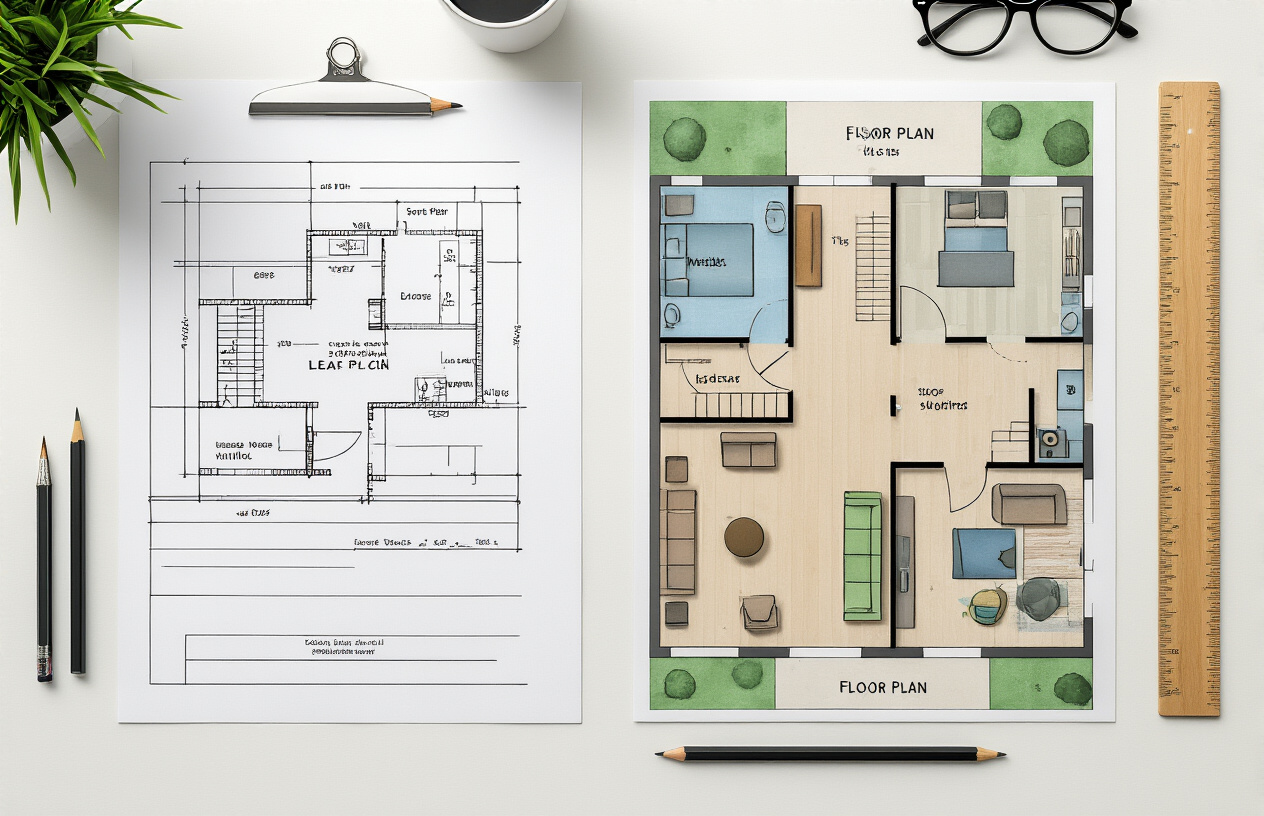
Lease plans and floor plans share striking visual similarities as both comprise scaled drawings providing detailed aerial views of property layouts. We often see confusion between these documents because they both show walls, doors, windows, stairs, and other fixed elements from above. However, a lease plan is an official Land Registry document that defines leasehold property boundaries and demise areas, while floor plans serve broader informational purposes across various property contexts.Professional requirements for both plan types
Both document types typically require professional involvement from experts in planning, surveying, or architecture to ensure accuracy and compliance. We find that lease plans must always maintain precise scaling requirements where different parts maintain correct proportional relationships, whereas floor plans may not always require strict scaling depending on their intended use, such as estate agent marketing materials.Why understanding the differences matters for property transactions
Understanding these distinctions proves crucial in property transactions because providing the wrong document type can result in costly delays and complications. We see that lease plans serve specific legal requirements for leasehold property registration with the Land Registry, while floor plans function more broadly for design, construction, marketing, and general communication purposes about property layouts.Understanding Land Registry Compliant Lease Plans
Official Documentation Requirements for Leasehold Properties
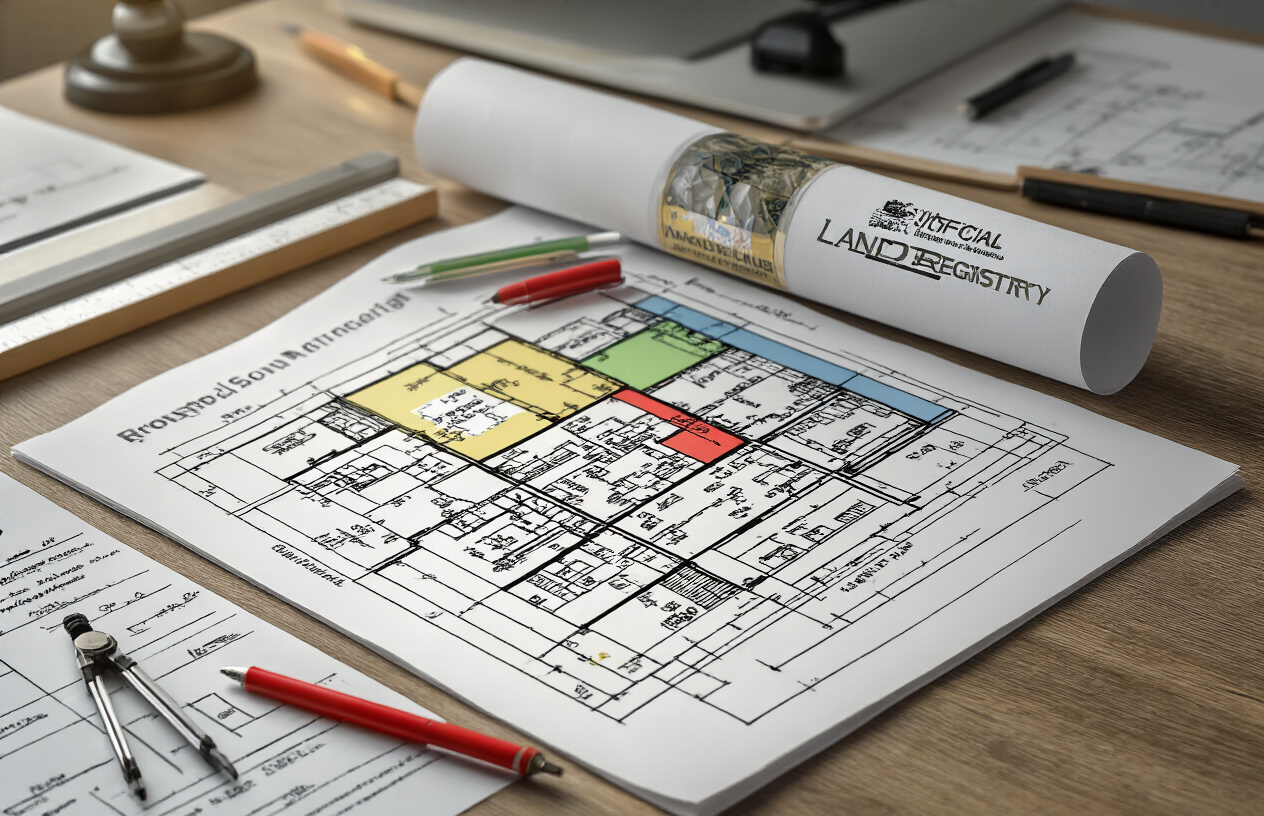
When dealing with leasehold properties, we must ensure that any new lease lasting seven years or longer includes a Land Registry compliant lease plan. This legal requirement means our plan must meet specific standards set by the Land Registry guidelines, which have been mandatory since 2002. We need to provide accurate documentation that clearly identifies which parts of a property are included in the lease, drawn to scale and showing all relevant land, gardens, and outbuildings.Essential Components Including Orientation, Identification, and Colour-Coding
Our compliant lease plans must include several critical elements to meet Land Registry standards. We need to ensure the plan is drawn accurately to scale – typically 1:1250 to 1:500 for urban properties and 1:2500 for rural areas. The plan must show orientation through a clear north point and include sufficient surrounding detail like roads, junctions, and landmarks for identification on Ordnance Survey maps. We must use metric measurements with a bar scale, and clearly define the property using appropriate edging, colouring, stippling, or hatching that doesn’t obscure important details.Compliance with Land Registry Guidelines for Property Registration
We must ensure our plans comply strictly with Land Registry guidelines to avoid rejection and costly delays. Our plans cannot be hand-drawn sketches or marked “for identification only” – they must be prepared accurately and professionally. For digital submissions, we need to scan at 200-600dpi in full colour at original size. The plan must agree with verbal descriptions in the deed and show buildings in their correct positions, including access drives and pathways that form part of property boundaries with measurements corresponding to scaled measurements in metres to two decimal places.When You Need a Lease Plan for Property Transactions

New leases over seven years requiring registration
When we register any new lease with more than seven years remaining, HM Land Registry mandates a compliant lease plan as part of the legal documentation. This requirement covers the vast majority of residential and commercial leases, which are typically granted for 99, 125, or 999 years. We must ensure the plan clearly shows the demised premises with accurate boundaries and sufficient detail to identify the property unambiguously.Converting houses into flats and lease extensions
Converting a freehold house into individual leasehold flats requires us to prepare separate lease plans for each new unit, clearly showing the specific demise of every flat within the building. When extending existing leases, we need new plans if the extended lease changes or updates the demised area. Each conversion and extension must include precise floor plans showing internal layouts, communal areas distinguished from private spaces, and any allocated parking or storage areas included in the lease.Selling properties with non-compliant existing plans
Older lease plans that don’t meet current HM Land Registry standards often cause delays during property sales, as non-compliant plans are one of the most common reasons for requisitions. When selling flats with outdated documentation, we frequently need to replace existing plans with new compliant versions that include proper scaling, red edging around demised areas, clear north points, and sufficient surrounding detail for accurate property identification on Ordnance Survey maps.Essential Elements Every Compliant Lease Plan Must Include
Scaled floor plans with red edging around demised premises
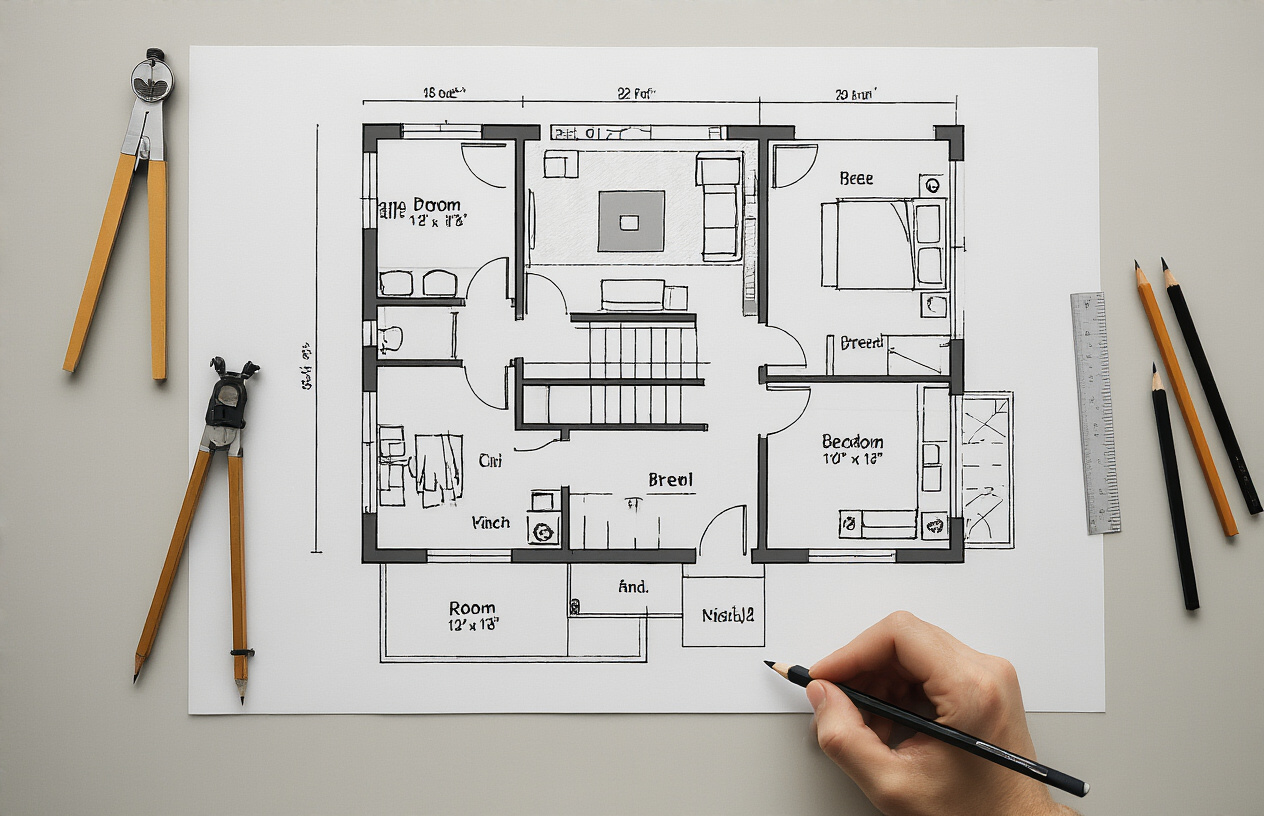
When creating compliant lease plans, we must ensure the demised premises are clearly defined with precise boundary edging. The plan must be drawn to a recognised scale – commonly 1:100, 1:200 or 1:1250 for urban properties, with 1:2500 for rural properties. Clear edging is everything, as any ambiguity leaves room for interpretation that could delay Land Registry registration. We include a bar scale using metric measurements to ensure consistency and accuracy throughout the documentation process.Location plans, north points, and floor level identification
Our compliant lease plans require sufficient surrounding detail to identify the property on an Ordnance Survey map. We include enough roads, junctions and landmarks to make the general location clear, alongside a mandatory north point for proper orientation. For flats and maisonettes, we show the location in relation to the external footprint of the building. When leased property spans multiple floors, we demonstrate the extent of the lease on each floor, using separate plans if necessary to maintain clarity.Clear distinction of communal areas and surrounding property context
We ensure our lease plans provide comprehensive context by showing the relationship between the demised premises and surrounding areas. The plan must include enough detail that the property can be readily identified with minimal room for error or misinterpretation. We clearly distinguish between areas included in the lease and communal spaces, ensuring the boundaries agree precisely with the verbal description contained in the deed to prevent potential disputes or registration delays.Getting the Demise Right on Your Lease Plan

Matching lease descriptions with plan boundaries
Now that we’ve covered the essential elements of lease plans, we must ensure our demise boundaries precisely match the verbal description contained in the deed. When defining demised premises, we combine multiple identification methods including property addresses, title numbers, redlined plans, and written descriptions to create comprehensive documentation that eliminates ambiguity and prevents costly disputes during Land Registry submission.What’s typically included and excluded from residential flats
For residential flats and maisonettes, we show the location of the property in relation to the external footprint of the building. Our plans must clearly indicate which areas belong to the leaseholder versus common areas shared with other residents. When the leased property spans multiple floors, we demonstrate the extent of the lease on each floor using separate plans if necessary to avoid confusion about boundary ownership.Avoiding mismatches between verbal descriptions and visual plans
We prevent plan rejection by ensuring our visual representations agree completely with the verbal descriptions in lease documents. Plans may be rejected if they’re ambiguous, not to scale, don’t match the verbal description, or cannot be accurately related to the Ordnance Survey map. We use coloured edgings to define different property parts and mark internal structures clearly, ensuring practical compliance for property management and dispute resolution.Handling Special Areas in Lease Plans

Communal spaces like hallways, staircases, and shared facilities
When preparing lease plans, we must carefully identify and mark communal areas such as hallways, staircases, and shared facilities using contrasting colours – typically blue or green – to distinguish them from the red-edged leased property. These shared spaces require precise documentation to prevent disputes and ensure HM Land Registry compliance.Parking spaces, storage units, and allocated areas
We need to clearly define allocated parking spaces and storage units within our lease plans, showing whether these areas form part of the demise or remain as shared facilities. Our plans must accurately represent these specific allocations to avoid boundary disputes between tenants and ensure transparent property transactions.Roof terraces, gardens, and multi-level property considerations
For multi-level properties, we must document roof terraces and gardens with particular attention to access routes and shared boundaries. Our lease plans need to show vertical boundaries clearly, indicating which levels are included in the lease and how communal outdoor spaces are designated to meet Land Registry requirements.IRI vs FRI Lease Types and Boundary Placement

Internal Repairing and Insuring leases for most residential flats
Internal Repairing and Insuring (IRI) leases place limited obligations on tenants, restricting their repair responsibilities to internal areas only such as flooring, plaster, decorations, and fittings. We find that landlords retain responsibility for structural elements, exterior maintenance, and roofing under this arrangement.Full Repairing and Insuring leases for commercial properties
Full Repairing and Insuring (FRI) leases transfer comprehensive responsibilities to tenants, covering both internal and external repairs including structural elements, walls, foundations, and roofs. We observe that tenants become liable for all maintenance costs while landlords typically arrange building insurance with costs recharged through insurance rent.Correct red edging placement based on lease type
Now that we have covered the fundamental differences between IRI and FRI leases, we must ensure our lease plans reflect these distinctions accurately. The red edging placement on lease plans directly corresponds to the repair obligations outlined in each lease type, with boundaries clearly delineating areas of tenant responsibility versus landlord responsibility for maintenance and structural elements.Common Costly Mistakes to Avoid
Using marketing floor plans instead of compliant lease plans
We often encounter property professionals who mistakenly assume marketing floor plans suffice for lease registration purposes. This costly oversight leads to rejected applications and significant delays. Marketing floor plans lack the technical precision required by Land Registry, missing crucial boundary details, accurate measurements, and proper demise identification that compliant lease plans must contain for successful registration.Incorrect boundary placement and missing communal area details
Boundary placement errors represent one of the most frequent registration failures we observe. When communal areas aren’t properly identified or boundaries are incorrectly positioned, the entire registration process stalls. We’ve seen applications delayed for months because plans failed to clearly distinguish between exclusive demise areas and shared communal spaces like corridors, stairwells, or parking areas.Mismatched plans and lease descriptions causing registration delays
Registration authorities frequently reject applications when lease plans don’t align perfectly with written lease descriptions. We regularly witness situations where discrepancies between the written lease terms and visual plan representations create confusion, requiring costly revisions and resubmissions. These mismatches often stem from rushed preparation or failure to cross-reference all documentation before submission, resulting in frustrated clients and extended transaction timelines. Understanding the differences between lease plans and floor plans is crucial for anyone involved in UK property transactions. We’ve explored how lease plans serve as legally compliant documents required for leasehold property registrations, while floor plans are more general-purpose drawings used for various applications. The key distinctions lie in their legal requirements, scale precision, and specific elements like north points, red edging for demise boundaries, and Ordnance Survey location plans.
Getting your lease plan right from the start can save you significant time and money in property transactions. Whether you’re dealing with IRI or FRI lease types, multi-floor properties, or special areas like parking and storage, ensuring compliance with Land Registry requirements is essential. We recommend working with experienced professionals who understand Practice Guide 40 requirements and can help you avoid the common costly mistakes that lead to requisitions and delays in your property registration.
Understanding the differences between lease plans and floor plans is crucial for anyone involved in UK property transactions. We’ve explored how lease plans serve as legally compliant documents required for leasehold property registrations, while floor plans are more general-purpose drawings used for various applications. The key distinctions lie in their legal requirements, scale precision, and specific elements like north points, red edging for demise boundaries, and Ordnance Survey location plans.
Getting your lease plan right from the start can save you significant time and money in property transactions. Whether you’re dealing with IRI or FRI lease types, multi-floor properties, or special areas like parking and storage, ensuring compliance with Land Registry requirements is essential. We recommend working with experienced professionals who understand Practice Guide 40 requirements and can help you avoid the common costly mistakes that lead to requisitions and delays in your property registration.

